
If you are extending, and a drain or sewer runs under or near where you want to build, you will need the agreement of the sewerage undertaker before you start. Across our whole coverage area that is Severn Trent.
What it costs. £250, including the site plan Severn Trent ask for and the call-out. What a CCTV drain survey costs.
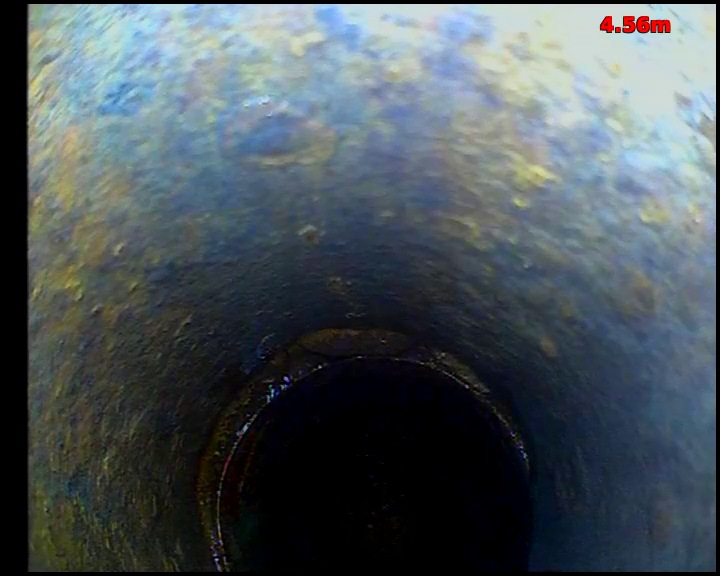
What they need first is an accurate record of what is actually there. That is what we produce: a CCTV survey of the run, its condition graded section by section, and a site plan showing where it goes and how deep it is.
Call 01902 475 611 · Request a survey
Why this affects far more properties than it used to
Before October 2011, the pipe running from your house to the sewer in the road was usually yours. The private sewer transfer changed that: most shared drains, and every lateral drain beyond the property boundary, became the sewerage undertaker’s.
The practical consequence is that a great many ordinary extensions now sit over a public sewer rather than a private drain, and that turns a decision you could once make yourself into one that needs Severn Trent’s agreement. A lot of people find this out from their building inspector, late, with the foundations already priced.
Three routes, depending on what is in the way
Build over. The extension sits directly over the pipe. Severn Trent will want to know the pipe’s line, depth, diameter, material and condition, and how the new structure will be founded so that its load does not bear on the pipe. A defect found under a planned extension is far cheaper to deal with before the building goes up than after.
Build near. Generally anything within three metres of a public sewer falls into the same conversation, even if you are not directly over it. Depth matters here: excavating alongside a sewer can undermine it.
Divert it. Where the pipe cannot be built over: a deep sewer, a large diameter, a manhole in the wrong place, or a condition too poor to build across: the route is a diversion under section 185 of the Water Industry Act 1991. This is a right to require the undertaker to move a public sewer, and the person requiring it pays for it. Severn Trent will not consider an application without an accurate record of the existing system, because they cannot design a diversion around a pipe nobody has mapped.
Manholes and inspection chambers
You will not normally get agreement to build over a manhole. Access has to be maintained, so the usual outcomes are relocating the chamber, diverting the run, or redesigning the extension around it.
This is worth establishing early. A manhole discovered under a planned kitchen extension after the drawings are approved is an expensive discovery, and it is exactly the sort of thing that shows on a survey in the first hour.
What we provide, and what we do not
We provide the CCTV survey, the MSCC-coded condition report, the drain map and the site plan: the evidence pack the application is built on. Same-day reporting, by NADC-certified surveyors, with the certification number on the report.
We do not submit the application, design the diversion, or carry out the works. We do not do drain repairs or excavation at all. That is worth saying plainly, because it means we have no interest in whether the answer turns out to be “build over it” or “move it”: the survey says what it says.
When to commission it
Before the drawings are finalised, not after. The survey tells you where the pipe runs and how deep it is, which is information your architect or structural engineer needs in order to design foundations that will be approved. Commissioning it after the design is fixed frequently means redrawing the design.
Allow time for the application itself as well. It is not instant, and it is not a formality.
Common questions
How do I know if there is a public sewer on my land? Severn Trent hold a sewer record you can request, but records are frequently incomplete, particularly for the lateral drains that transferred in 2011. A survey establishes what is actually there rather than what is on file.
Can I just build over it and say nothing? It is a poor idea. It surfaces at building control, at sale, or when the sewer needs attention and the undertaker exercises its right of access. Retrospective agreement is harder to get than the original would have been.
The drain only serves my house, do I still need agreement? If it stays within your boundary and serves only your property, it is a private drain and Building Regulations apply rather than a build over agreement. The survey and the plan are what establish which of those you have.
Is a survey needed for a small conservatory? Some minor works over a lateral drain can be dealt with more simply. Severn Trent will tell you which category you are in, but they will want to know what the pipe is and where it goes either way.
Related: CCTV drain surveys · Drain mapping and site plans · Homebuyer drain surveys Guides: Build over agreements and Section 185 diversions · Who owns your drain
Related: Percolation tests for soakaways
Talk to the person who will do the work.
Surveys across the West Midlands, south Staffordshire, east Shropshire and north Worcestershire. Unblocking closer to home.