
We survey across WR1 to WR5 from our base in Castlecroft, Wolverhampton. Every section graded, every defect coded to MSCC, a site plan, the full video — and the report back the same day, by NADC-certified surveyors.
Call 0800 772 33 99 · Request a survey · What a survey covers
Why drains fail in Worcester
A drain fails because of what is around it, not just what goes down it. Three things account for most of what we log locally.
A cathedral city that floods, predictably and often. The Severn through Worcester is one of the most flood-prone reaches in the country, and the low ground at Diglis, Hylton Road and St Johns knows it. High river levels surcharge outfalls; high groundwater drives infiltration through any open joint. Both are routine findings on surveys here.
A medieval core with drainage of every period. The city centre has been continuously built on for the best part of two thousand years, and its drainage has been altered by all of it. Records are partial at best, which is why so many Worcester surveys are commissioned for the plan as much as the condition report.
All of it shows up on camera and none of it shows from a manhole cover, which is the practical reason a survey is worth more here than an opinion.
Why people here ask for one
Most often it is an insurance claim, or settling who owns a shared run. All the reasons a survey gets commissioned
Areas we cover
Barbourne, Battenhall, Claines, Diglis, Northwick, St Johns, Warndon, Worcester city centre and Whittington — WR1 to WR5.
Worcester sits inside our survey radius but outside our drain unblocking radius, so we cover it for planned survey work rather than emergency call-outs.
A question we get asked here
Will a survey help with a flood insurance claim? It can. Insurers want to know whether water came up through the drainage or in over the ground, and a graded, coded report is evidence they will accept.
What we pull out of drains around Worcester
It varies street by street in Worcester, but WR1 and WR5 follows a recognisable pattern and Barbourne and Battenhall are typical of it.
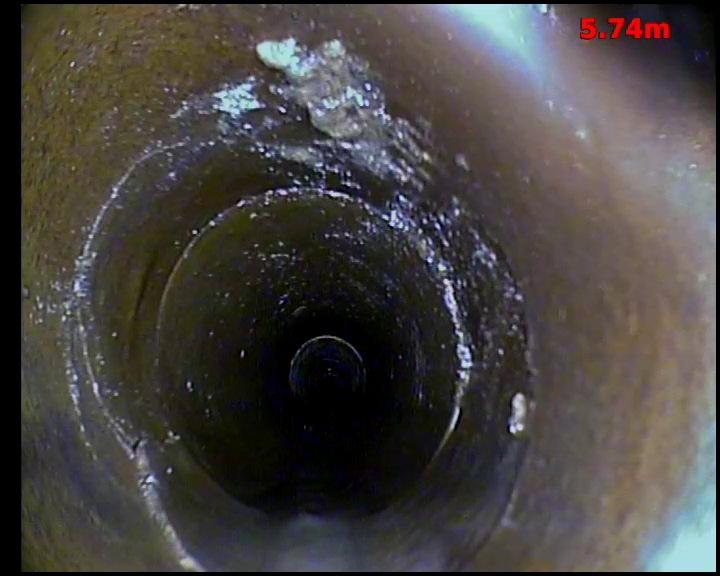
The blockage itself is rarely a mystery. It is nearly always one of five things.
Wipes, marketed as flushable. They are not. They keep their structure in water, and they are the first thing we look for.
Sanitary products and nappies. Both swell on contact. Both are common enough that a family home in WR1 and WR5 will meet the problem sooner or later.
Cooking fat. It leaves the sink as liquid and arrives in the drain as a solid. Where a run is shallow or has lost its fall, it builds into a plug.
Root ingress. Mature trees and a joint that has moved are all it takes.
Structural damage. A displaced joint or a crushed section catches solids on every flush, and no amount of clearing fixes that.
Extending a property in Worcester
Worcester covers a fair spread of housing, from Barbourne, Battenhall, Claines, and this applies to most of it.
The expensive version of this always runs the same way: plans drawn, quotes accepted, foundations marked out, and then somebody lifts a cover in the middle of where the extension is going.
If you intend to build over a public sewer or lateral drain, or within three metres of one, you need Severn Trent’s agreement. Two things catch people out after the 2011 transfer: the pipe down your own garden may be a public sewer if it serves more than one property, and the length beyond your boundary transferred as well.
They will want to know where the pipe runs, how deep it is, what condition it is in and where the chambers are. That list is a description of a survey with a drainage plan, which is why it is worth doing at design stage rather than after.
Recurring blockages: the cheaper order of operations
Drainage across Worcester — Barbourne and Battenhall and the streets around them — follows one pattern. WR1 and WR5 are what that covers.
Clearing the same Worcester drain every few months costs more over a year than finding out why once.
Repeat blockages in one spot almost always have a physical cause. A displaced joint leaves a step for solids to catch on. A length that has lost its fall holds water, and solids drop out of suspension in the flat. A crushed section under a drive does the same.
So: jet it properly rather than rod it, put the camera down while the bore is clear, and get the defect positioned in metres and coded. “There is a problem out the back” is not something anyone can quote against. “Joint displaced medium at 14.2 m, severity 3” is.
What you get after a survey in Worcester
Worcester covers a fair spread of housing, from Barbourne, Battenhall, Claines, and this applies to most of it.
Four things, and they are the same whether the survey is for a purchase, a landlord or your own peace of mind.
Every accessible run on camera, so you can see the pipe rather than take our word for it.
Every defect coded to MSCC5 – the Manual of Sewer Condition Classification, 5th Edition, published by WRc. A standard means a defect is described the same way by any competent surveyor. “Joint displaced medium” has a precise definition: the pipe has moved at the joint by between one and one and a half times the wall thickness.
A condition grade per section, so an observation is separated from a problem.
A site plan showing where the drainage actually runs – for many properties the only accurate drawing that has ever existed.
The report comes back the same day, by NADC-certified surveyors.
What a survey tells a buyer that the building survey does not
In Worcester – WR1 and WR5 – this is one of the questions we are asked most, and the answer is usually the same across Barbourne and Battenhall.
RICS home surveys come at three levels and none of them cameras the drains. A mortgage valuation certainly does not.
What the camera adds is the material, the condition, the layout and the ownership picture – four things that between them decide whether a drainage problem on a Worcester property is a morning’s work or a serious bill.
Timing matters. Before exchange you have the information and the leverage. After exchange you have only the information.
Why roots keep finding the same drain
Around Barbourne, Battenhall, Claines the housing is old enough for this to matter, and WR1 and WR5 is where we see it most.
If roots have been cleared from a Worcester drain once and returned, nothing has gone wrong – that is simply what happens when the way in is still open.
Roots enter through an existing defect: an open or displaced joint, a crack, a break. Cutting them out removes the mass but leaves the opening, and the same tree is still looking for the same water.
The useful question is therefore not how to kill the roots but where they are getting in, at what distance along the run, and whether that length is even yours – which is a camera and a plan, not another clearing.
Nearby: Droitwich · Bromsgrove · Stourport-on-Severn Coverage: Areas we cover across Worcestershire
Talk to the person who will do the work.
Surveys across the West Midlands, south Staffordshire, east Shropshire and north Worcestershire. Unblocking closer to home.